
Abigail Spanberger, a former C.I.A. officer who cast herself as a centrist problem-solver, was elected governor of Virginia on Tuesday, defeating Lt. Gov. Winsome Earle-Sears in a contest that laid bare the state’s lingering racial fractures even as it produced its first female chief executive.
With 98 percent of the expected vote counted, Ms. Spanberger, a Democrat, led Ms. Earle-Sears, a Republican, 57 percent to 43 percent, according to The Associated Press. The margin — far wider than polls had forecast — handed Democrats full control of state government for the first time since 2013 and delivered a stinging repudiation of the national Republican brand in a swing state that has trended purple.
Ms. Spanberger’s victory capped a campaign that began as a policy debate over taxes, schools and health care but veered into uglier territory, with Ms. Earle-Sears, the first Black woman to serve as Virginia’s lieutenant governor, subjected to a series of racist attacks that reverberated across the state.
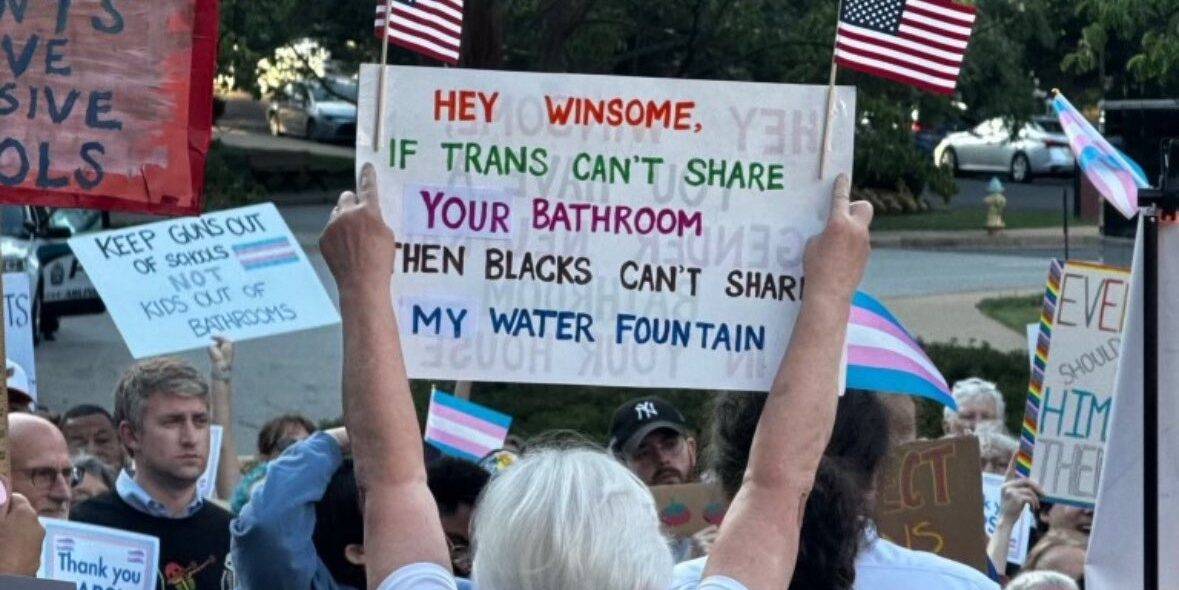
In August, at an Arlington County School Board meeting where Ms. Earle-Sears spoke against transgender bathroom policies, a protester brandished a sign invoking Jim Crow: “Hey Winsome, if trans can’t share your bathroom, then Blacks can’t share my water fountain.” The image, widely circulated online, prompted Ms. Spanberger to call the message “racist and abhorrent” Twitter. Gov. Glenn Youngkin, a Republican, termed it “repulsive.”
Two months later, during a James Madison University football game, Scott Pogorelc, a Democratic donor whose son plays on the team, was captured on video shouting at Ms. Earle-Sears, “Go back to Haiti! Traitor!” The university banned Mr. Pogorelc from future events, and his employer, a Lockheed Martin subsidiary, fired him days later.
Ms. Earle-Sears, who would have been only the second Black governor in American history, responded with characteristic steel. “I’ve been called names no one should ever hear,” she wrote on social media. “But I am no victim.”
The episodes overshadowed a résumé that included military service, small-business ownership and a term as the state’s second-in-command. Ms. Earle-Sears campaigned on eliminating the car tax and rolling back recreational marijuana, casting herself as a conservative unifier.
Yet in the end, Virginia voters — in a state that was once the capital of the Confederacy — delivered a landslide to Ms. Spanberger, a white former congresswoman who promised to protect federal workers and govern from the center.
The result has stirred unease among some observers who see in it a familiar pattern: a highly credentialed Black candidate, buoyed by historic potential, turned away at the polls. (RELATED: Youngkin Launches State-Run SNAP Replacement as Federal Shutdown Freezes Benefits)
Speaking to a jubilant crowd at the Greater Richmond Convention Center, Ms. Spanberger sought to bridge the divide. “Tonight, Virginia chose pragmatism over partisanship,” she said, her family at her side. She paid tribute to Ms. Earle-Sears — “the first woman elected statewide in Virginia” — and vowed to expand health care, lower costs and keep education decisions local.
Democrats also claimed the attorney general’s office and the lieutenant governorship, completing a sweep that positions Ms. Spanberger to take the oath on Jan. 17, 2026, succeeding the term-limited Mr. Youngkin. (RELATED: Split Tickets Could Make a Comeback in Virginia’s 2025 Elections)
For all the celebration, the campaign’s racist undercurrents remain a sobering footnote. In a state still reckoning with its past, Ms. Spanberger’s triumph is a milestone — but one shadowed by the question of why a qualified Black pioneer was left behind.