
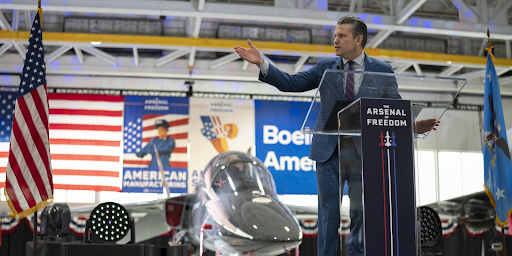
Virginia‘s time as home to Boeing‘s defense headquarters is ending almost as quickly as it began, with the company announcing a move back to Missouri.
The aerospace manufacturer announced it will relocate its Defense, Space and Security headquarters from Arlington back to St. Louis, reversing a move that brought the division to Northern Virginia just four years ago.
Company leaders said the shift will place executives closer to engineers and manufacturing operations, where thousands of employees design and build defense systems.
“The headquarters move … reflects our continued focus on disciplined performance across our business,” Boeing Defense, Space and Security CEO Steve Parker said in a statement. (RELATED: NYC Will Pay Residents to Shovel — But Only With Proper ID)
St. Louis served as Boeing‘s defense headquarters for two decades before leadership moved elsewhere in 2017. The region remains one of the company‘s largest employment hubs, with more than 18,000 workers across its facilities.
Defense Secretary Pete Hegseth praised the decision during remarks at Boeing’s Missouri facility, calling employees essential to maintaining American military strength.
“You are the patriots that are key elements to ensuring peace through strength,” Hegseth said.
Notably, Boeing’s relocation comes as Virginia undergoes significant policy shifts under Gov. Abigail Spanberger, who has advanced a sweeping economic agenda during her first months in office.
Spanberger and Democratic leaders in the General Assembly, for example, have promoted her “Affordable Virginia Agenda,” a package of legislation focused on housing, healthcare, and energy policy. Spanberger also pledged to sign legislation raising Virginia’s minimum wage to $15 per hour by 2028, a change expected to increase labor costs for employers across multiple industries. Additionally, lawmakers are considering bills to create new top income tax brackets of eight percent to ten percent for high earners, as well as additional taxes on investment income.
The agenda even includes measures to expand renewable energy deployment, improve grid efficiency, and support energy storage systems as the state continues implementing its long-term clean energy transition under existing law. (RELATED: Virginia Redistricting Showdown Moves From Courtroom to Ballot Box)
At the same time, Spanberger has emphasized efforts to attract defense and technology investment to the state. Her administration announced earlier this month that defense technology firm GRVTY plans to invest $8 million to establish and expand its headquarters in Tysons, while space technology company Umbra committed $6.75 million to expand its Fairfax County operations.